

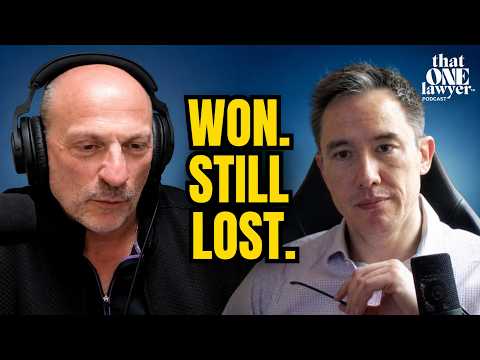
The Lawyer Who Won the Case and Lost Everything
Victor Suthammanont never followed the path most lawyers are told to follow.
Before law school, he studied drama at NYU Tisch, founded a theater company, wrote screenplays, performed stand-up comedy, and worked survival jobs while trying to build a creative life in New York City. Then he pivoted into law, clerked for a federal appeals judge, spent years at the SEC, became a litigation partner, and somehow still carried the soul of an artist through every stage of it.
In this episode of That One Lawyer Podcast, Neal Goldstein sits down with Victor Suthammanont to talk about identity, storytelling, grief, ambition, and why the legal system can never fully deliver the justice people think it can.
Victor explains how acting school unexpectedly prepared him for litigation, depositions, witness examinations, and client relationships. He talks about learning to read people, finding “the truth of the moment,” and why the best lawyers are often the ones who stop performing and start listening.
The conversation also explores the emotional cost of practicing law. Victor opens up about growing up feeling disconnected, losing his mother at a young age, and later losing his father during COVID while writing his novel Hollow Spaces. That emotional tension shaped both his career and his writing.
Hollow Spaces became one of the most acclaimed legal thrillers of the year, earning recognition from The New York Times as one of the 100 notable books of 2025 and one of the best crime novels and mysteries of the year. But the book is less interested in courtroom victories than what happens after the verdict.
What happens when someone is acquitted and still loses everything?
What happens when the justice system technically works, but nobody feels justice was done?
Victor discusses the central idea behind Hollow Spaces: that a not guilty verdict does not erase suspicion, trauma, or public judgment. The episode dives into the uncomfortable reality that the legal system often resolves cases without resolving human pain.
For lawyers, this episode is also a masterclass in authenticity.
Victor talks about why vulnerability matters in legal practice, why young lawyers should stop trying to imitate courtroom personalities, and how confidence without arrogance creates trust with judges, clients, and colleagues. Neal and Victor discuss the difference between bravado and authenticity, and why so many lawyers struggle to build meaningful client relationships because they never learn how to tell the truth about themselves.
This episode is for:
Young lawyers trying to find their identity
Litigators who feel burned out or disconnected
Law students wondering if creativity belongs in the legal profession
Writers balancing demanding careers
Trial lawyers interested in persuasion and storytelling
Anyone questioning whether success alone creates fulfillment
Topics covered include:
NYU Tisch School of the Arts
New York Law School
Federal clerkships
SEC investigations and enforcement
Trial advocacy
Storytelling in litigation
Witness credibility
Emotional intelligence in law practice
Vulnerability and leadership
Writing fiction while practicing law
Legal thrillers and crime fiction
Generational trauma
Asian American identity in Big Law
The American justice system
Why acquittals do not always feel like justice
Parenting, grief, and legacy
Victor Suthammanont’s story is a reminder that careers do not have to be linear to become meaningful. Sometimes the things that make a lawyer different become the exact things that make them effective.
Subscribe to That One Lawyer Podcast for conversations with lawyers who built careers on their own terms.